


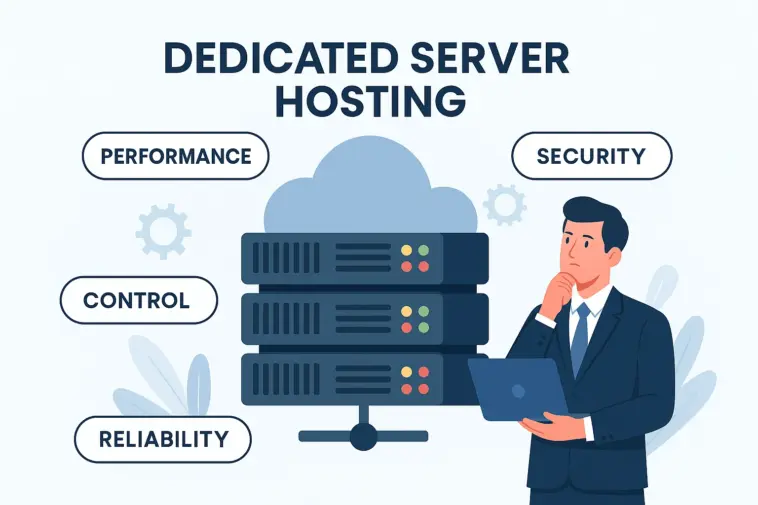
As businesses grow and demand more from their online infrastructure, the question inevitably arises: is it time to move to dedicated server hosting? While shared hosting and VPS solutions are great entry points, enterprises, high-traffic websites, and mission-critical applications often require more power, reliability, and control than virtualized solutions can provide.
In this guide, we’ll explore what dedicated server hosting is, why businesses choose it, how it compares with VPS hosting, and expert tips to help you make the right decision.
What is Dedicated Server Hosting?
Dedicated server hosting means renting an entire physical server exclusively for your website or application. Unlike VPS, where resources are virtualized and shared with other users, a dedicated server guarantees that all CPU, RAM, and storage are yours alone.
- Full Performance: No resource sharing.
- Complete Control: Install any operating system or application.
- Enhanced Security: Full isolation from other tenants.
- Scalability: Customizable hardware configurations.
If you’re running large-scale applications, enterprise workloads, or e-commerce platforms, you may want to explore Dedicated Server Hosting options designed for high performance and security.
Dedicated Servers vs. VPS Hosting
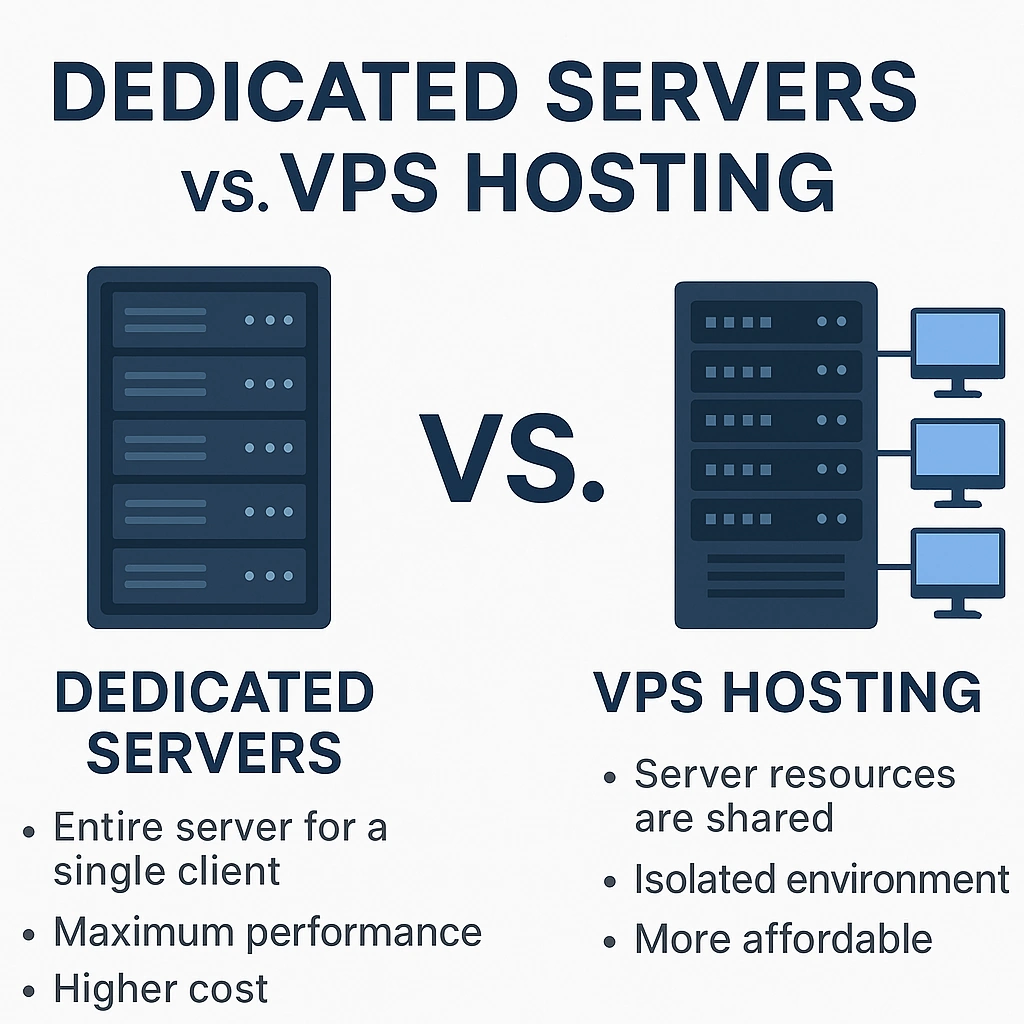

| Feature | VPS Hosting | Dedicated Hosting |
|---|---|---|
| Performance | Good, but shared hardware | Excellent, full hardware access |
| Security | Secure, but shared kernel | Maximum security, full isolation |
| Scalability | Easy upgrades | Custom hardware scaling |
| Cost | Affordable for SMBs | Higher, enterprise-grade |
When Should You Choose Dedicated Hosting?
Dedicated servers are not for everyone. But they are the right choice when:
- Your website has high daily traffic (100k+ visitors).
- You run resource-heavy applications like streaming, gaming, or AI workloads.
- You require maximum security for financial, healthcare, or enterprise systems.
- You need custom server configurations not available in shared or VPS environments.
Choosing the Right Dedicated Server Provider
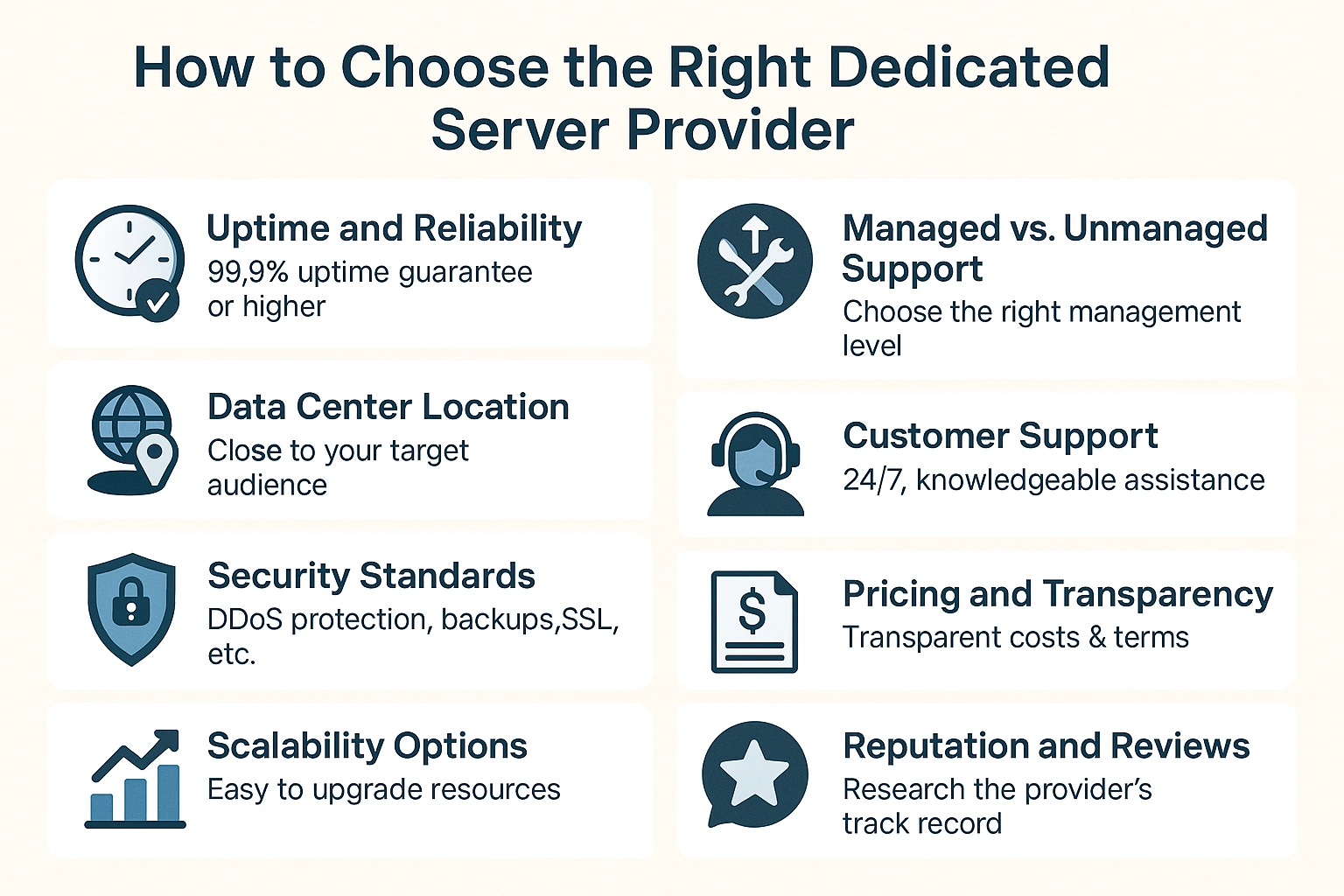

Not all dedicated hosting providers are created equal. The provider you choose will directly impact the speed, uptime, and reliability of your applications. Here are the most important factors to consider before signing up:
1. Uptime and Reliability
Look for providers that offer a 99.9% uptime guarantee or better. Downtime can cost businesses thousands of dollars per hour, so reliability is non-negotiable.
2. Data Center Location
Choose a provider with data centers close to your target audience. This reduces latency and ensures faster loading times for your users.
3. Security Standards
Dedicated servers should include DDoS protection, firewalls, SSL support, and regular backups. If your business handles sensitive data, check whether the provider complies with standards like GDPR, HIPAA, or PCI DSS.
4. Scalability Options
As your business grows, you may need more CPU power, RAM, or storage. A good provider makes upgrades simple and minimizes downtime during scaling.
5. Managed vs. Unmanaged Support
Decide whether you want a managed server (where the provider handles monitoring, updates, and troubleshooting) or an unmanaged server (where you control everything, but also handle all technical issues).
6. Customer Support
24/7 support with knowledgeable staff is critical. Test the provider’s response time before committing, as server issues often occur outside regular business hours.
7. Pricing and Transparency
Dedicated servers are an investment, but pricing should be transparent. Watch out for hidden costs such as setup fees, bandwidth overages, or support add-ons.
8. Reputation and Reviews
Finally, research customer reviews and independent benchmarks. Providers with consistent positive feedback for performance and reliability are usually a safer bet.
By carefully evaluating these factors, you’ll be able to find a dedicated server hosting provider that aligns with your performance needs, budget, and business goals.
Tips for Choosing the Right Dedicated Server Provider
- Check Uptime SLAs: Look for 99.9% or higher availability.
- Consider Managed vs Unmanaged: Managed servers save time, unmanaged give full control.
- Evaluate Data Centers: Choose a provider with Tier-III or Tier-IV data centers.
- Security First: Ensure DDoS protection, backups, and firewalls are included.
- Scalability: Ask about hardware upgrade options.
Frequently Asked Questions (FAQ) About Dedicated Hosting
1. Is dedicated hosting worth the cost?
Yes, if your business needs guaranteed performance, uptime, and security. While more expensive than VPS, the benefits outweigh the cost for enterprises and mission-critical workloads.
2. How is a dedicated server billed?
Most providers charge monthly or annually. Pricing depends on CPU, RAM, storage, and bandwidth requirements.
3. Can I host multiple websites on a dedicated server?
Yes, a dedicated server can host multiple domains, applications, and environments without performance drops, as long as resources are managed properly.
4. Do I need technical knowledge to run a dedicated server?
If you choose an unmanaged plan, yes. But many providers offer managed dedicated servers, where the provider handles updates, monitoring, and security.
5. What industries benefit most from dedicated servers?
E-commerce, fintech, SaaS startups, healthcare, and gaming industries often rely on dedicated servers for compliance, security, and reliability.
6. How does dedicated hosting affect SEO?
Directly, no. Indirectly, yes — faster speeds, better uptime, and improved security create a better user experience, which search engines reward.
Managed vs. Unmanaged Dedicated Servers
When choosing a dedicated server, one of the first decisions you’ll face is whether to go with a managed or unmanaged option. This choice depends on your team’s technical expertise and your business goals.
Managed Dedicated Servers
- Provider Responsibility: The hosting company manages server setup, security patches, monitoring, backups, and troubleshooting.
- Best For: Businesses without in-house IT teams, or those that prefer to outsource technical management.
- Advantages: 24/7 monitoring, proactive updates, peace of mind.
- Downside: Higher monthly costs due to added services.
Unmanaged Dedicated Servers
- User Responsibility: You get root access and must configure, secure, and maintain the server yourself.
- Best For: Developers, system administrators, and IT-savvy businesses needing full control.
- Advantages: Lower cost, complete customization, flexibility.
- Downside: Requires significant technical expertise and time investment.
Enterprise-Grade Hosting with High Security
Enterprises handling sensitive data — such as financial institutions, healthcare providers, or SaaS platforms — require dedicated hosting that prioritizes security and compliance.
Key Security Features to Look For
- DDoS Protection: Mitigates distributed denial-of-service attacks.
- Hardware Firewalls: Adds a physical layer of network protection.
- Encryption: SSL/TLS for data in transit, disk encryption for data at rest.
- Compliance: GDPR, HIPAA, and PCI DSS certifications for industry standards.
- 24/7 Monitoring: Real-time intrusion detection and threat response.
Enterprise-grade hosting also ensures redundancy with RAID storage, multi-data-center failover, and guaranteed SLAs for uptime. For mission-critical applications, these features are not optional — they’re a necessity.
Fastest Dedicated Servers for Gaming Businesses
Online gaming is one of the most resource-intensive industries, requiring servers that minimize latency and handle thousands of concurrent players. Choosing the right dedicated server for gaming can make or break user experience.
Minimum Technical Requirements for Gaming Servers
- CPU: At least Intel Xeon or AMD EPYC with 3.5GHz+ base clock, multi-core (8+ cores recommended).
- RAM: Minimum 32 GB DDR4/DDR5 (64 GB+ for MMOs).
- Storage: NVMe SSDs for ultra-fast read/write speeds, 1 TB+ recommended.
- Network: 1 Gbps dedicated bandwidth (10 Gbps preferred for global gaming platforms).
- Ping/Latency: Data centers should be located close to target regions (less than 50 ms latency for best experience).
Dedicated servers designed for gaming often include anti-DDoS protection, custom firewall rules, and advanced network optimization to ensure smooth gameplay even under heavy loads.
Dedicated Server Pricing and Cost Breakdown
Dedicated hosting is an investment, but costs vary widely depending on hardware, management, and provider reputation. Understanding pricing factors helps businesses make informed decisions.
Factors Affecting Price
- Hardware: High-performance CPUs, NVMe storage, and large RAM allocations increase costs.
- Bandwidth: Plans with unlimited or high-traffic allowances are more expensive.
- Management Level: Managed servers cost 20–40% more than unmanaged ones.
- Support: Premium support packages with guaranteed SLA response times add to the price.
- Data Center Location: Servers in North America and Europe may cost less than those in premium APAC regions.
Typical Price Ranges (Monthly)
- Entry-Level Dedicated Servers: $80 – $120
- Mid-Tier Business Servers: $150 – $300
- Enterprise-Grade Servers: $400 – $1,000+
While VPS may be cheaper, dedicated servers provide unmatched reliability, making the higher cost worthwhile for enterprises.
Cloud vs. Dedicated Server Performance
Cloud hosting and dedicated servers are often compared — both have strengths and weaknesses depending on business needs.
Dedicated Servers
- Performance: Maximum power, no shared resources.
- Security: Isolated environment with full control.
- Best For: Enterprise workloads, gaming, financial apps, and compliance-heavy industries.
Cloud Hosting
- Flexibility: Instantly scalable resources.
- Cost Efficiency: Pay-as-you-go model avoids unused capacity.
- Best For: Startups, SaaS apps, and businesses with unpredictable traffic.
In short: Cloud hosting wins for flexibility, while dedicated servers win for raw performance, security, and long-term stability.
Final Thoughts
Dedicated server hosting is the gold standard for businesses that demand performance, control, and reliability. If you’re scaling fast or handling sensitive data, it’s time to upgrade from shared or VPS hosting to a solution built for enterprises.
Choosing the right provider today can save you downtime, security risks, and hidden costs tomorrow.